*where Lolita is the diminutive form of Lola, itself a diminutive form of Dolores. Dolores = suffering.

Sunday, 23 January 2011

11 February 2008, 00:16

Elevator, part I

Secretly, there was a craving for
Marriage.
Not the kind of marriage that drags your
Hearse; the soul-finding kind.
She loved the idea – although it lingered
Solitary in the depths of her cerebral membranes
Unable, and unutterable.

You see, she had too much to expect.
First there was that elevator, of
Moods, or was it reality?
Then there was a cupid’s heart, a
Drawing,
Suspect to creation by fingers wonderful,
Divine almost in their strange nature.

With every breath, the mirror’s painting came to
Life, more profound than ever.
As her breathing turned into anxious, unscrupulous
Exhalations of air, the heart seemed so
Solid – invincible through infinity.
And the silver box kept moving
Upwards, she thought she’d
Hit the sky with a blow in the
Head so severe it would stay
Forever – in a sweet, painful way.

The lift stopped. His floor. The painting of
Panting anxieties faded into the miserable
Image of herself.
           
She stepped out. Door’s open, he said. Again,
Lying on that couch of dispirited dreams,
Watching.

I’m sorry.
Unhappy, some…times.
Me?! Sometimes. Shock… Paradox?
No. Perhaps inevitable. Don’t
Cry. Hug. Tear. Mascara.
Love.

You.


Elevator, part II

History repeats itself, I’ve heard them say.
Now I can verify it’s true –
It’s not just Bush, Bush Jr., Bush Jr. Jr.,
That gets to fuck up twice. Thrice.

So that elevator. Yes, much frequented.
Up and down, up and down, up and down.

I know what you’re thinking. That’s not it.
At least it wasn’t supposed to be it.

Okay, yes. Maybe.

He panted a heart on the glass – three years ago.
Now I was standing against the door
With his hair in my face
And my ass in his hands
And some whiskey breath slipping down my throat –
It became disconcertingly familiar, over the years. Homely.

It was hot while it lasted, so hot the mirror steamed up again.
Déjà vu.

The lift stopped. His floor.
He carried me to bed but –


4 April 2006, 21:11


Drown me
In your deep blue sea, there
Where I first saw my reflection on the
Clear water of your turbid ocean.

Walk with me
Through your blond, ripe fields, there
Where I first felt the softness of futility in
Each grain of golden wheat.

Taste for me
The sweetness of your apple, the one
That turns to bitter cider as soon
As the sharp wind enters its core.

Feel on me
The shiver of your winter, the shiver
That burrows under my skin every time your
Soft snow covers me.

Dance with me
On the lace clouds of your sky, there
Where I weaved the whistle of my first melody
With the silver threads of your song. 

Friday, 12 November 2010

When I want to cross the road
To get to where I live

I cross the road in black
I wonder can they
see me

in my coat
black on the tar

Are we all squirrels
Like the cat I nearly hit that day

they all just seem to run

across

whenever your headlights come
too close.

bizarre

Monday, 8 November 2010

i don't mean to make a scene


Thanks to a certain cloud that came my way and opened my eyes to this song.

Monday, 18 October 2010

sketch of oz

the irony.
the intellectuelle
bare aerobics

'take me for a ride'

'sucking on knowledge.'
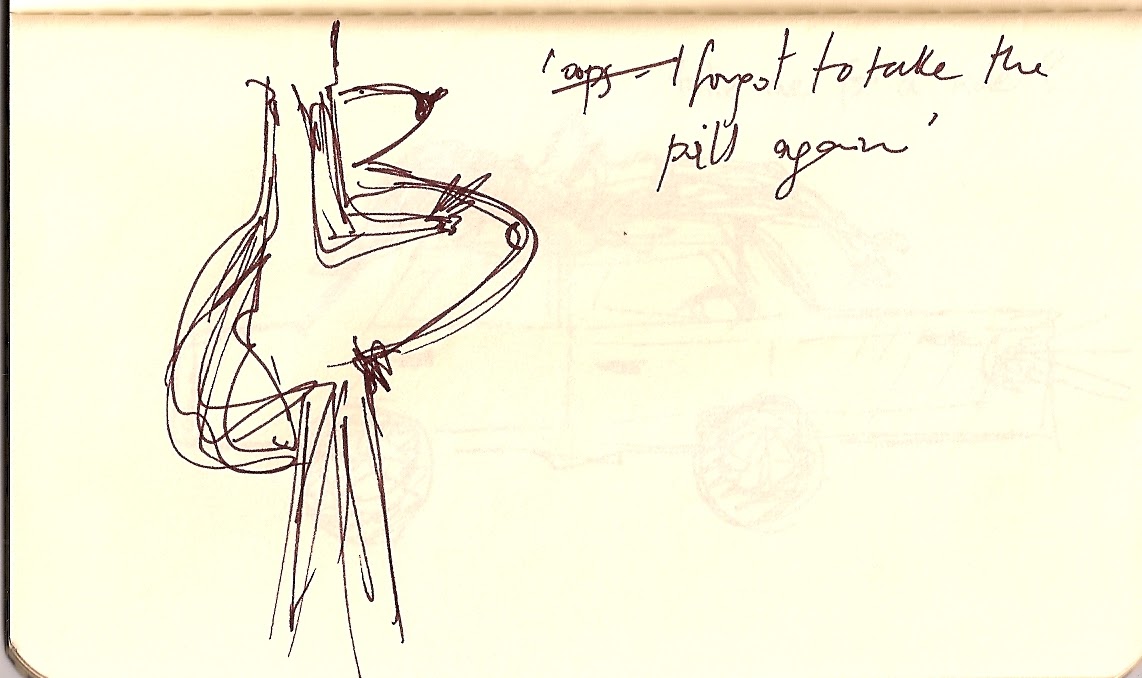
oops - i forgot to take the pill again.


Wednesday, 15 September 2010

quasi-chemical reaction


Bilingual
by Jose Nunez.

Taking the concept of love as a chemical reaction to a higher level.

"The only aphrodisiac I need is your voice."

(aka)

Your voice triggers the secretion of endorphins
and other chemicals that make me
wanna jump you.

Saturday, 11 September 2010

Lolita night

The much-anticipated screening of Lolita to my honour (by my own self) finally happened last night, and attracted the entire family much to my surprise.

Lolita's red, heart-shaped, ostentatious glasses that feature in my blog's image were absent, to my great disappointment, as the film was in black and white. Which I don't mind it's just I love those sunglasses.

So, the film vs. the book.

I kept feeling the need of filling people in about what Humbert Humbert had confessed to me through Nabokov's magnificent penmanship in the novel, stuff that couldn't be included in a film version. Either because they were too explicit, or because a film, as a study of an individual's psychology, is bound to be less in-depth than a document written by the character itself - or a novel using the premise that it is a type of journal of the central character.

James Mason however carried across the shifting thoughts and moods of Humbert excellently. Kubrick's direction made the shifts even more obvious - as in, traceable - but still subtle enough to show the interiority of his mind's processes. The 'Englishness' and vanity of Humbert Humbert were excellently portrayed, although I thought that some major scenes that shift the 'blame' of the affair towards Humbert (and are so poignant in the book, those voltas through which you escape H.H's perspective and realize that Lolita is actually tormented by their relationship) were left out. I know that Kubrick was aware of the affect censorship had on the film - he once mentioned that had he known how much of it had to be cut he would never had done it (Stanley Kubrick, A Life in Pictures) - but the part where he rocks Lolita on his knees and gets aroused or hints that show that Lolita cries every night when travelling with him I thought were essential to show the dynamic between the two characters.

As it was, Lolita, played by the gorgeous Sue Lyon, was the temptress... The scene that is supposed to show the audience how their physical relationship began went somewhat like this:

Lo: Do you wanna play a game?
HH: What game?
Lo: One that I played in camp.
HH: What do you mean?
Lo: Guess.
HH: (typically) I'm not good at guessing.
Lo: You know what game I'm talking about.
HH: (pause, terrified)

and then Lo whispers something we presume is profane in his ear - if not profane something sexual - she initiates it, it seems.

But I don't think that's what the book wanted the reader to see. Yes, the child is a manipulative brat - but she is nonetheless a child. Lyon's physical appearance of course raised the impression of Lolita's age to around 15 or 16, making the whole affair less of a shock and more of a "she was asking for it" thing.

The end, I believe, hit a perfect balance. When HH visits Lolita's home and she is pregnant, Kubrick and his cast succeed in capturing what I felt the book captured in those final scenes. She is above him, and although only 17 she controls him and is more in control than him. Humbert Humbert breaks down in tears - the grand male in his grand, old world coat with his big fat cheque - while Lolita asks him not to. A reversal of an earlier scene when Lolita is bawling after finding out her mother was dead and Humbert nurses her in his arms, half-father half-lover, and asks her to "Try to stop crying"?

Peter Sellers' role as Clare Quilty was good - a dark side of Sellers - but too much. Clare Quilty is a big part of the novel but not THAT big. I didn't feel like a one-man-show by Sellers was needed. His speeches dragged on a bit. And although the first scene of the film (and last basic scene of the novel) was excellent, with Peter Sellers showing Quilty's decadent, even perverse side, it established an underlying theme of Humbert vs. Quilty that took on a greater dimension than I expected. The novel is not about Humbert's manhood vs. Quilty's - its more about what goes on in HUmbert's head and between him and Lolita - and so I thought that that interpretation compromised the subtlety of the film and shifted attention from the central locus of the novel.